Clean Agent vs. CO2 Fire Suppression: Choosing the Right System for Your Anchorage Business
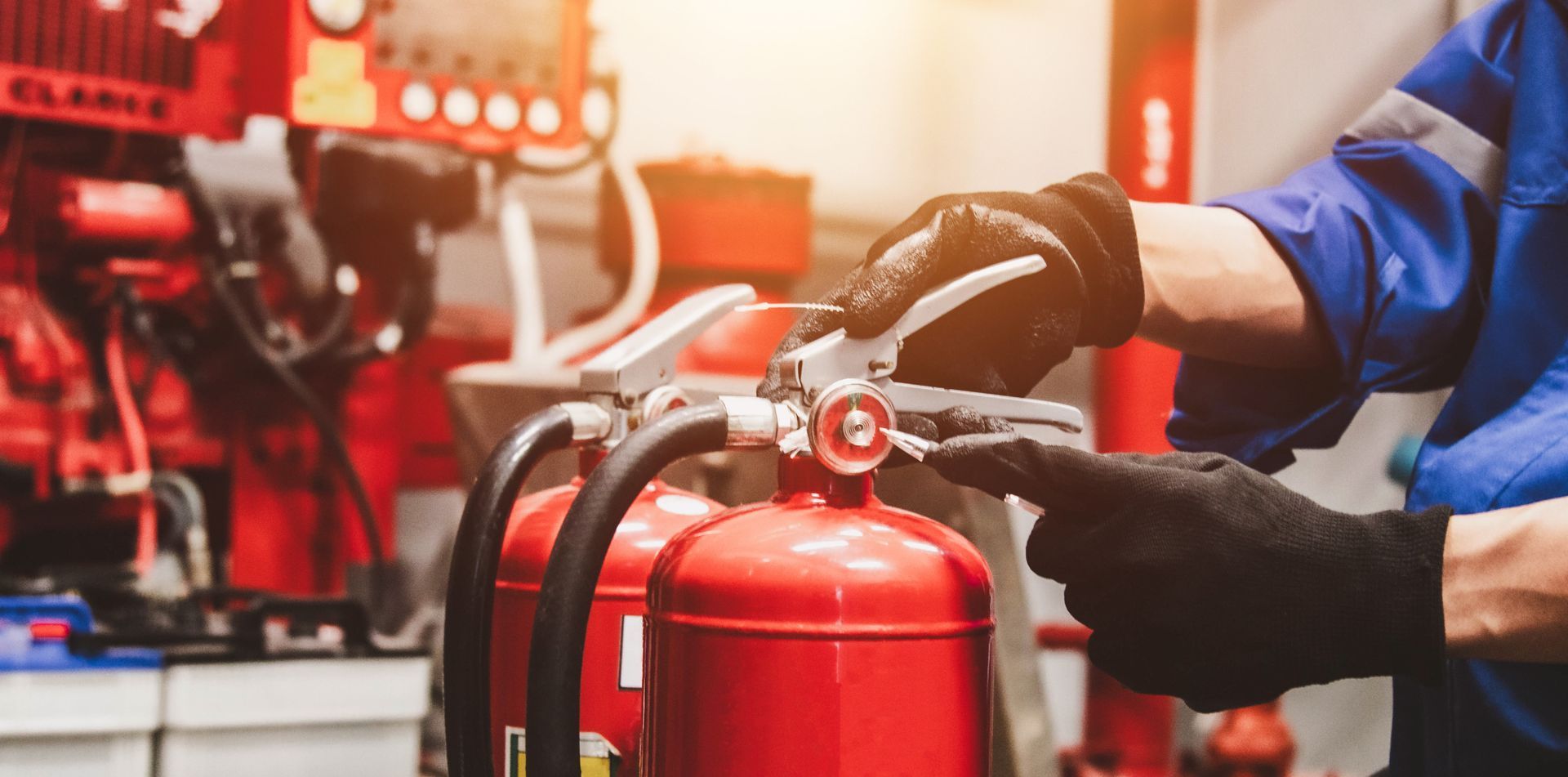
Businesses in Anchorage, AK, that protect sensitive equipment, employees, or valuable inventory need to understand the key differences between clean agent and CO2 fire suppression systems before choosing one.
Selecting the wrong system can mean unnecessary risk to people, costly asset damage, and compliance headaches with state and national fire codes. This post breaks down both system types, how Alaska's climate factors in, and which facilities tend to benefit most from each option.
What Is a Clean Agent Fire Suppression System?
Clean agent systems are among the most people-safe options for fire suppression in commercial settings. These systems use chemical agents such as FM-200 (HFC-227ea) or Novec 1230 (FK-5-1-12) to suppress fire without leaving residue, damaging electronics, or displacing oxygen. Both agents discharge within ten seconds as a non-toxic gas, suitable for Class A, B, and C hazards.
FM-200 suppresses fire primarily through heat absorption. Novec 1230 works similarly but carries a much lower environmental footprint, with a global warming potential rating of 1 compared to FM-200's 3,500. Neither agent displaces oxygen, keeping the area safe for occupants during evacuation. This makes clean agent systems well suited to occupied spaces like offices, server rooms, and archive areas.
Both systems are governed by NFPA 2001, which requires design concentration be achieved within 10 seconds for most applications.
Key Advantages of Clean Agent Systems
- Leaves no residue, protecting electronics and records from secondary damage.
- Safe for occupied spaces during discharge and evacuation.
- Governed by a well-established national compliance framework under NFPA 2001.
How Does a CO2 Fire Suppression System Work?
CO2 systems suppress fire by displacing oxygen from the hazard area so combustion cannot be sustained. This makes them highly effective for industrial spaces and areas that are not regularly occupied.
CO2 is not safe for people. Concentrations above 10% may cause convulsions or coma, and concentrations above 30% cause loss of consciousness within seconds. CO2 systems flood protected spaces at a minimum design concentration of 34%. NFPA 12 requires a pre-discharge alarm that activates at least 30 seconds before agent release in any normally occupied space.
Key Advantages of CO2 Systems
- Leaves no chemical residue, simplifying post-event cleanup.
- Well suited to unmanned industrial spaces such as generator rooms, compressor areas, and warehouses.
- Can protect very large enclosures where clean agent cylinder storage would be impractical
Cold-Climate Considerations for Anchorage Businesses
Alaska's climate introduces performance factors that rarely apply in the Lower 48. Anchorage regularly sees temperatures well below 0 degrees Fahrenheit, and uninsulated mechanical rooms, attic spaces, and attached warehouses are especially vulnerable to cold.
Gaseous suppression systems are stored under pressure in cylinders, so temperature-controlled storage rooms may be needed. Environments that fall too far below recommended temperature ranges can affect pressure readings and agent integrity. Any Anchorage facility planning a suppression system installation should factor cylinder storage location and heating into the design plan from the start.
CO2 systems in very cold environments may also require additional engineering attention. NFPA 12 requires that agent quantity be calculated for worst-case conditions, including minimum atmospheric pressure, which is a relevant factor for extreme-climate sites.
Cold air infiltration through cable penetrations, door seals, or HVAC ducts is especially important to address for clean agent systems, since agent escaping before reaching effective concentration will undermine suppression performance.
Which System Fits Your Anchorage Facility?
Clean agent systems are typically the better fit for server rooms and data centers, medical and dental facilities, archive and records storage, and occupied office environments where personnel may be present during business hours.
CO2 systems are often a better match for industrial machinery spaces, generator enclosures, and compressor rooms that are rarely occupied during operation, as well as large warehouse facilities near the Port of Anchorage or industrial corridors along Dowling Road, and manufacturing operations where flammable materials require robust suppression in unmanned zones.
A Simple Decision Framework
- Identify whether people are present in the protected space during normal operations.
- Determine whether your assets can tolerate heat, water, or residue from alternative suppression methods.
- Assess cylinder storage space and whether it can be temperature-regulated through an Anchorage winter.
- Confirm which NFPA standard applies: NFPA 2001 for clean agents, NFPA 12 for CO2 systems.
- Consult with a licensed fire protection specialist familiar with Alaska's Authority Having Jurisdiction (AHJ) requirements.
What Compliance Looks Like in Practice
Both system types require ongoing inspection and maintenance. NFPA 2001 defines five frequency tiers: monthly visual checks, semi-annual container checks, annual functional tests, five-year hydrostatic testing, and enclosure integrity testing. NFPA 12 requires verifying CO2 cylinder weight and pressure every six months and testing all control panel components annually.
Talk to UniFire About Fire Suppression in Anchorage, AK
Choosing between clean agent and CO2 systems is one of the most important fire safety decisions an Anchorage business owner can make. UniFire serves Anchorage, AK, with specialized solutions designed for Alaska's unique climate, building types, and compliance landscape. The team can assess your facility, recommend the right system, and manage installation and ongoing maintenance to keep you code-compliant year-round.
To learn more about how UniFire's special hazard protection services can safeguard your most critical assets, contact UniFire or call 907-929-3473 to request a free consultation today.